The Guest-Ready Room Is Not a Standard
A guest-ready room need not stay empty. Decide what it does between visits, then prepare a comfortable place to sleep without disrupting daily life.

Does a guest-ready room need to stay empty between visits? A guest-ready room can serve its purpose for a stay without becoming a permanent standard for the household. The useful question is what the room needs to do on an ordinary day, and how much change a visit can reasonably require.
A spare room is rarely spare in every sense. It may hold laundry awaiting folding, a desk used for work, a sewing machine or boxes that have not yet found another home. Those uses are not evidence of failure; they are part of how the home works.
A room can serve more than one purpose
“Guest room” sounds like a complete description, but it names only one possible use. A room might also be a study, a place to mend clothes, a quiet corner for reading or a space where a child plays when the weather keeps everyone indoors. Those functions can coexist, even if they cannot all happen at once.
It helps to distinguish a room’s main use from its occasional use. The main use shapes ordinary days; the occasional use calls for a temporary adjustment. A desk may earn its place every weekday, while a bed is needed for a visitor now and then. Neither use makes the other less legitimate.
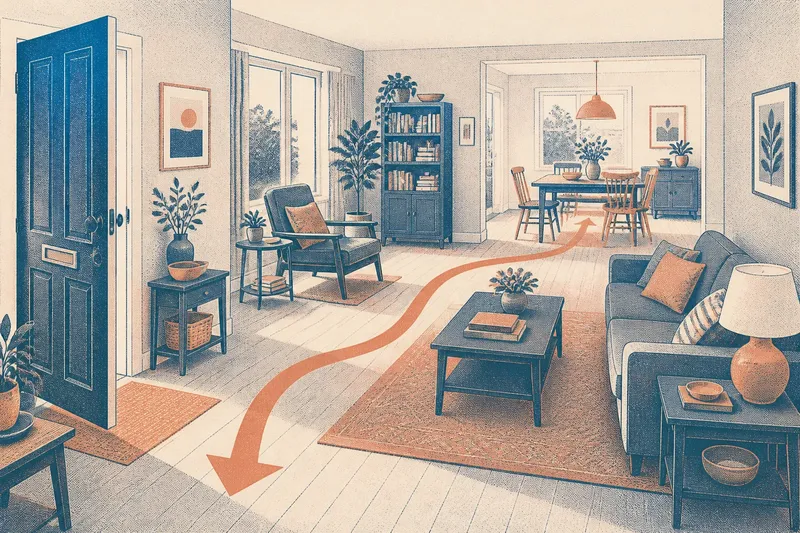
Think of the room as a dining table rather than a museum display: it can be cleared for a particular occasion without remaining set for that occasion all week. The useful standard is not constant readiness, but a workable changeover that does not demand an unreasonable effort.
Decide what the room must do on an ordinary day
Start with the moments when the room is actually used. Notice what people do there, what needs to remain accessible and what interrupts those activities. A chair covered in clean clothes may signal that the room lacks a better place for laundry, rather than that someone has neglected a guest suite.
Then consider which parts of a guest arrangement can stay in place without obstructing daily use. A bedside lamp might serve as useful task lighting; spare bedding can live in a cupboard elsewhere. The aim is not to preserve a perfect guest setting, but to decide which objects earn their space throughout the year.
Imagine a household that uses its spare room as a sewing space, with a cutting mat on a desk and fabric in labelled drawers. A relative plans to stay for a weekend. The household puts the sewing supplies in one lidded container, checks that the cutting mat and desk are clear enough to move, then makes up a fold-out bed. The expected result is a room that can host the visitor while the sewing setup remains contained and easy to restore afterwards.
This arrangement depends on the particular home. A fold-out bed may suit one room, while a mattress stored in a cupboard may suit another. If mobility, access or a product’s setup is a concern, follow the manufacturer’s instructions and seek qualified help where needed.
Prepare for a visit without maintaining a display
Hospitality is often reduced to what a visitor sees on arrival: smooth bedding, clear surfaces and matching towels. Those details can be pleasant, but they are not the whole experience. A comfortable place to sleep, a way to find the bathroom and a clear explanation of household arrangements may matter more than a room that appears unused.
Keep a small set of guest items together if that makes preparation easier. It might include clean sheets, a spare towel and a charging lead, stored in a wardrobe or labelled bag. This is not a demand to keep a room permanently staged; it is a way to avoid searching through several cupboards when a visit is arranged.
Before a stay, settle a few practical details: where a bag can go, which bathroom the visitor will use and whether anything in the room should be left undisturbed. A brief message can answer these questions without requiring the room to imitate a hotel. Clear expectations are a form of care, not a substitute for it.
Choose what to change before a guest arrives
A short changeover plan can make the room’s competing uses easier to manage. For each item or area, check what it supports and decide what should happen if a guest needs the space:
- Check whether the bed or sleeping surface is available; if it is, prepare clean bedding, and if it is not, choose another suitable arrangement or explain the limitation.
- Check whether a clear path reaches the bed and door; if it does, leave it open, and if it does not, move only items with an agreed storage place or reconsider the arrangement.
- Check whether work equipment is private, fragile or needed during the visit; if it is, keep it in place and arrange a separate sleeping area, and if it can be moved safely, store it together in a labelled container.
- Check whether bedding and a towel are clean and accessible; if they are, set them aside for the stay, and if they are not, arrange suitable alternatives rather than assuming they will be ready.
- Check whether the visitor can reach the bathroom and understand how to use it; if they can, share any relevant household details, and if they cannot, explain the constraint and discuss another plan.
- Check whether another household member’s belongings would need to be moved; if they would, ask first, and if there is no agreed place for them, leave them undisturbed and adjust the guest setup.
What should a guest-ready room provide?
Does a guest room need to be empty between visits?
No. It can hold the tools and belongings that support its everyday purpose, provided there is a sensible way to make room for a visitor when needed. The question is whether the household can make that change without losing access to important items or creating undue strain.
Can a home office also work as a guest room?
Often, if the sleeping arrangement and work setup can be changed without putting private or fragile equipment at risk. A desk cover, storage box or screen may help keep work materials together, while an agreement about which items can be moved prevents confusion.
What if there is no spare room?
Then a guest room may not be a realistic expectation for the home. A sofa bed or another shared arrangement may be possible, but it is also reasonable to explain the limits and suggest a nearby alternative when overnight hosting would compromise someone’s needs.
How much preparation is enough?
Enough preparation means the visitor can sleep, find basic facilities and understand any household arrangements. Extra decoration or a fully cleared wardrobe is optional, not a measure of how much the host cares.
Let the household set the standard
A useful standard begins with the people who live in the home. If someone needs the room for study, rest, care work or a hobby, that need is part of the room’s design brief. A visitor’s comfort matters too, but it need not erase the routines that make the household function.
Agree on boundaries in advance where possible. Decide which items are safe to move, what needs to stay accessible and how much notice makes an overnight visit practical. In a shared household, ask before relocating another person’s work or belongings; a tidy surface is not worth creating a new problem elsewhere.
These decisions may change as work patterns, family needs or health change. A room that once hosted guests easily may later become a nursery or a place for remote work. Revisiting its purpose is not inconsistency; it is a normal response to the life happening inside it.
Make readiness temporary and specific
Once a visit is agreed, adjust the room for that particular person and stay. One visitor may need a quieter place to sleep; another may be comfortable using a study after its equipment has been covered. Ask about practical needs rather than guessing what a universally prepared room should contain.
After the visit, return items to their ordinary places and restore the room’s everyday function. This small reset helps prevent temporary hospitality from becoming an unspoken permanent assignment. The space can then serve the people who use it most, while remaining available for guests when circumstances allow.
A guest-ready room is not a test of whether a home is organised or generous. It is a decision about how one space can accommodate an occasional need without pretending that the need is constant. When the room’s real purpose is clear, preparing for a visitor becomes a manageable act of welcome rather than a standard the household must perform every day.